
Identity Resolution Software
Connect Data.
Recognize Customers.
Buying Signals connects fragmented customer records, digital identifiers, and consumer intelligence to help businesses recognize customers across data sources, build more complete profiles, and activate those identities across marketing channels.
Resolve My Customer Data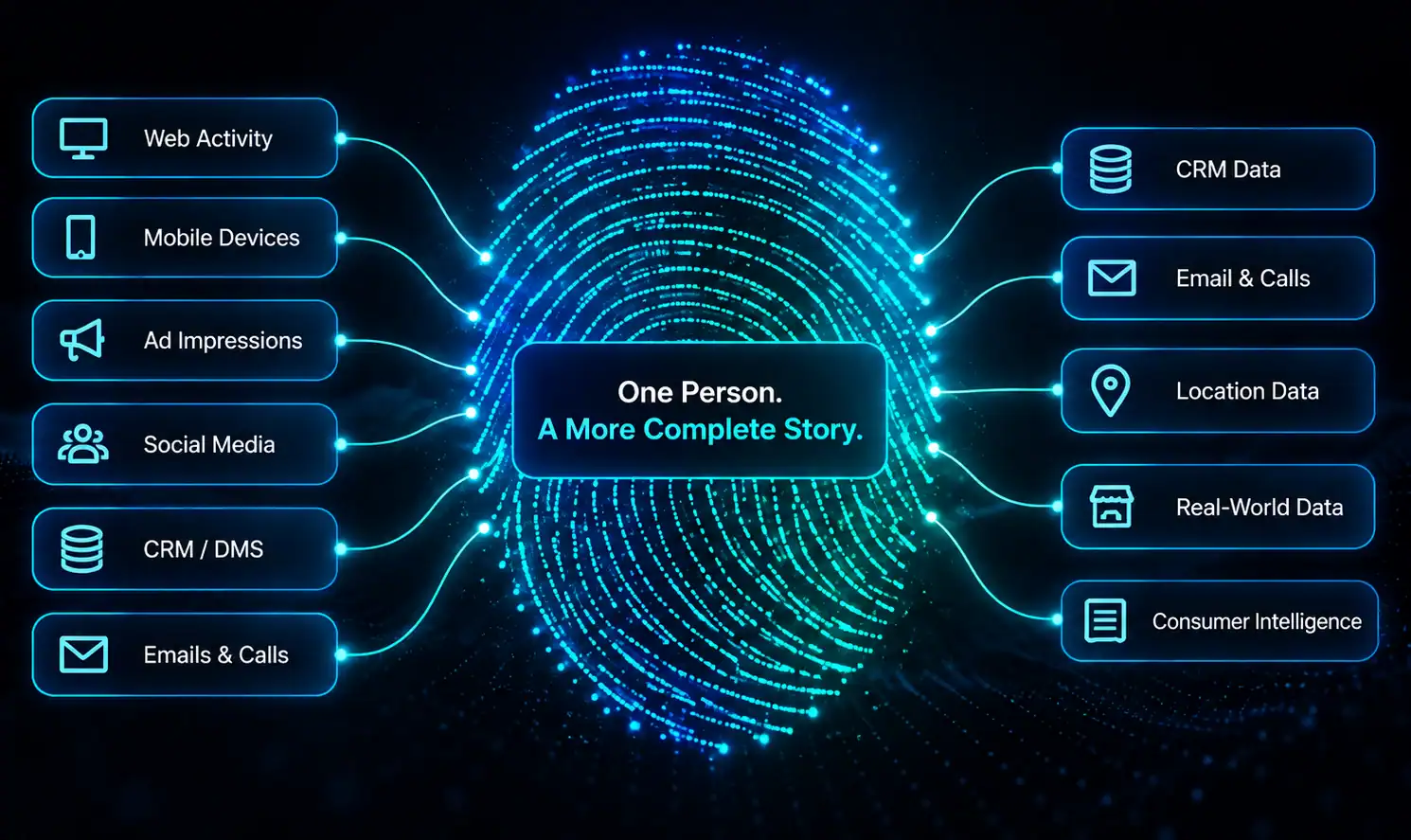
How Identity Resolution Works
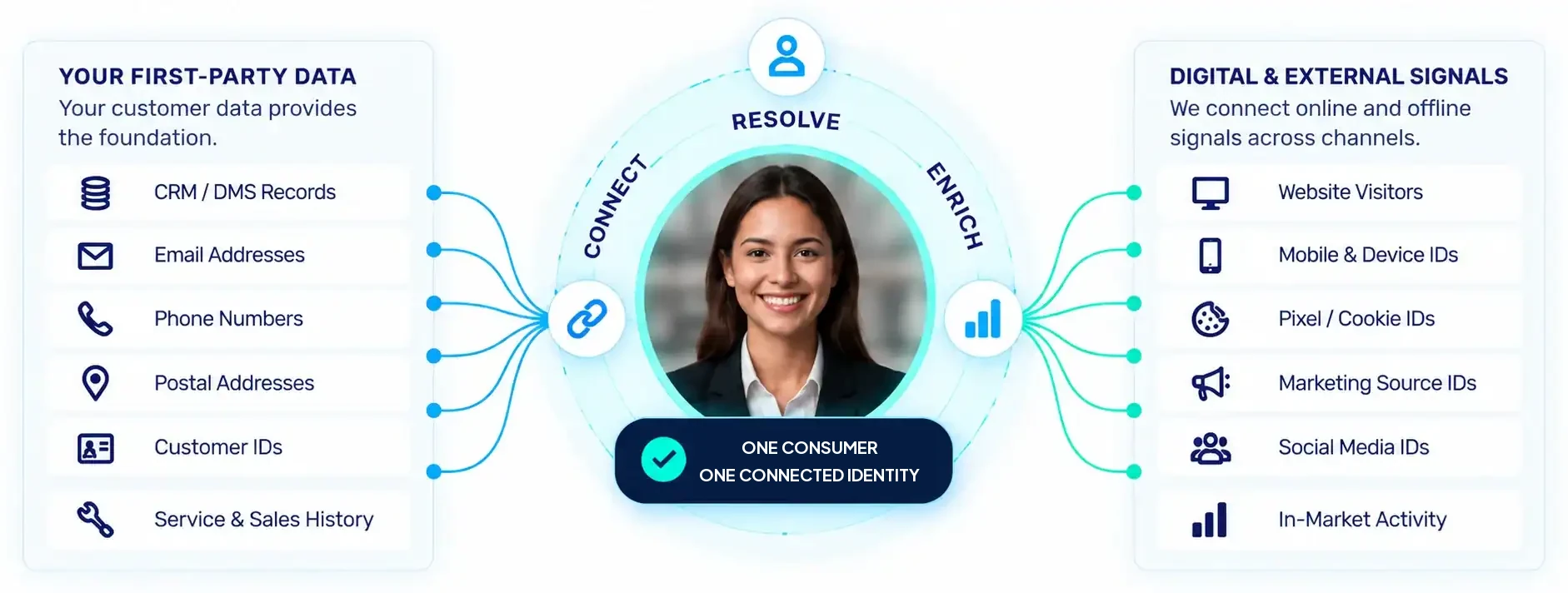
The Buying Signals Identity Graph matches and connects fragmented customer information using first-party data, digital identifiers, and Xcelerated consumer intelligence. These connections help businesses recognize the same consumer across multiple records and interactions, creating a more complete and consistent customer profile.
Website Visitor Identification
Most website visitors never submit a form or provide their contact information. Buying Signals Insight Pixel helps connect eligible website activity to identifiable consumers, providing additional customer insights and opportunities to understand and engage visitors who might otherwise remain anonymous.
See How It Works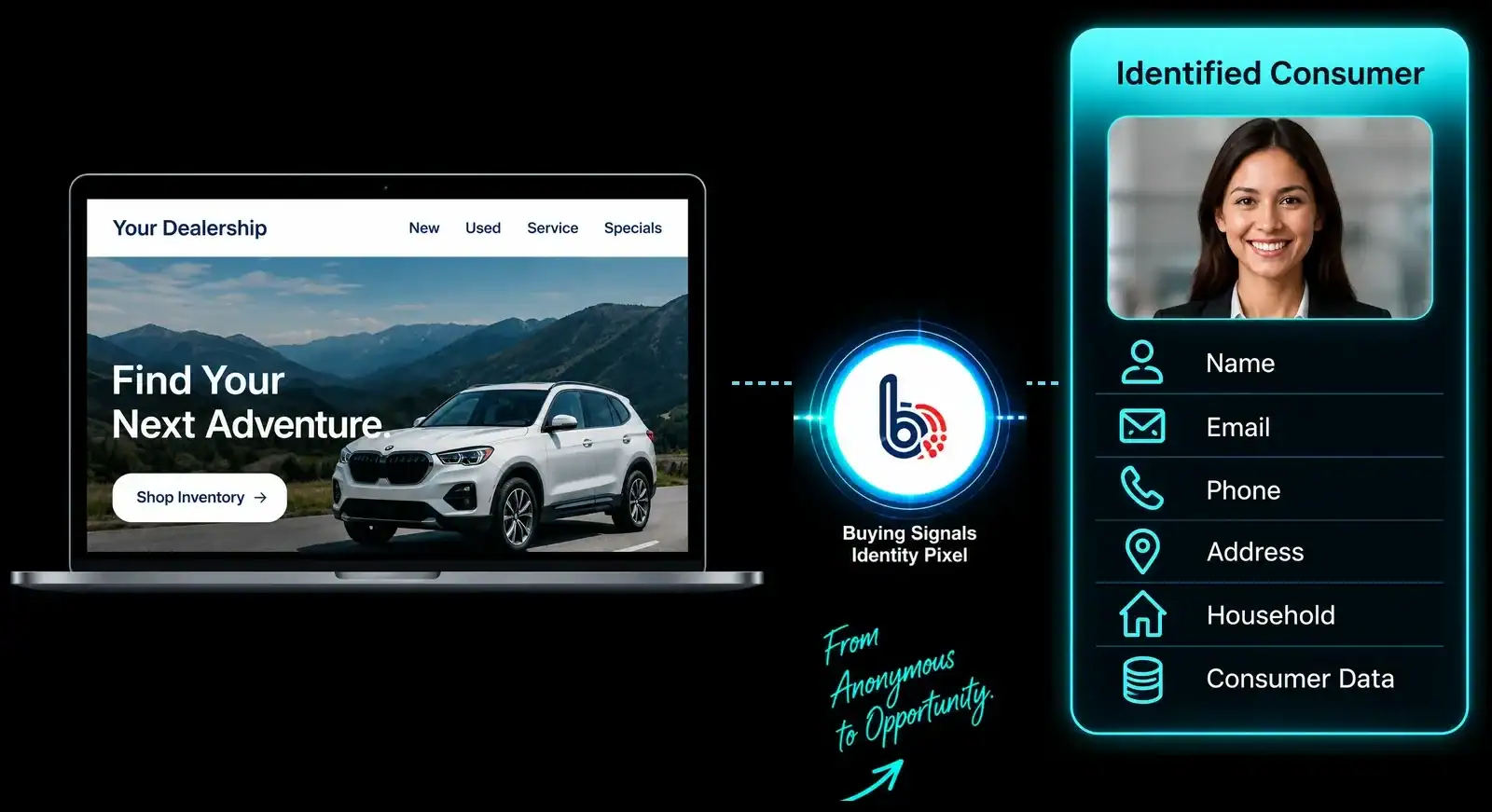
Identified Traffic
Customer Profiles
Marketing Opportunities
Consumer Identity Enrichment
Once customer identities are resolved, Buying Signals can expand those profiles using Xcelerated consumer intelligence. Hundreds of available consumer attributes help businesses better understand customer characteristics, identify relevant audiences, and develop more informed marketing strategies.
Explore Consumer Intelligence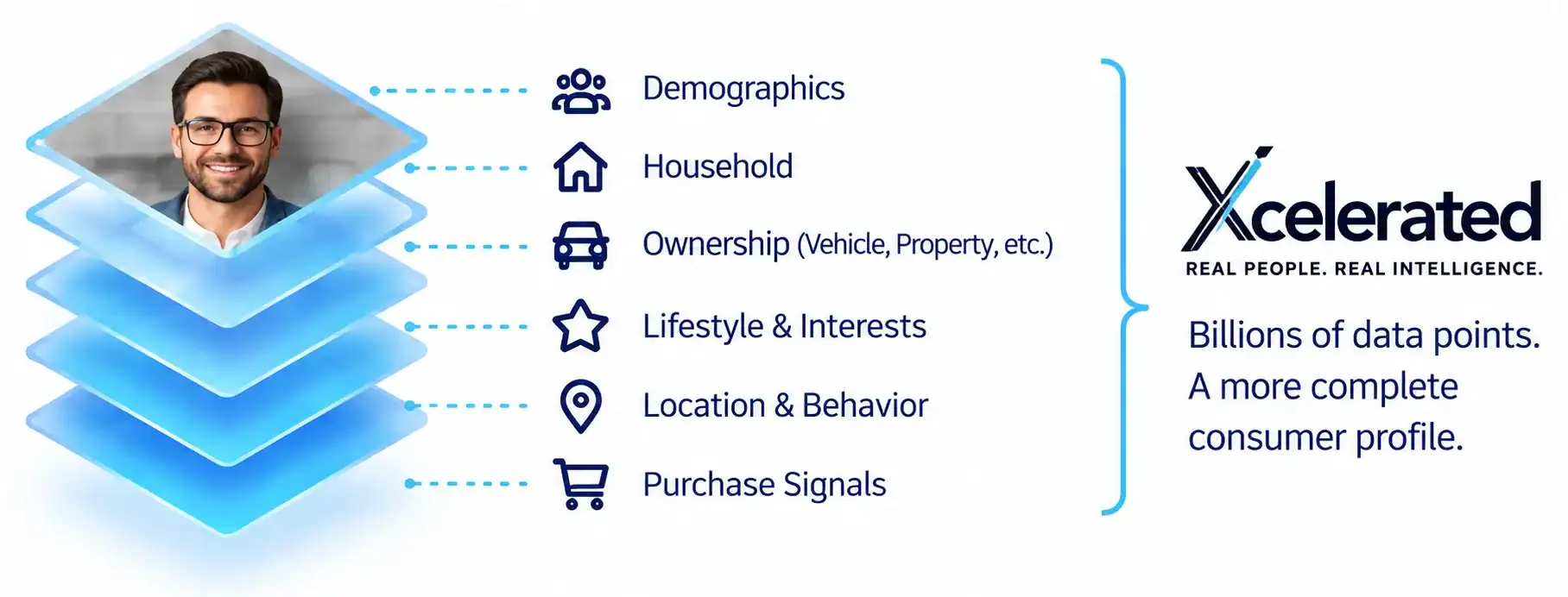
Activate Customer Identities
Resolved customer identities become more valuable when businesses can put them to work. Buying Signals helps connect enriched consumer profiles with supported marketing and customer systems, enabling more relevant audience targeting, customer engagement, and marketing measurement.
More Relevant Marketing.
More Opportunities.
Identity Resolution FAQs
Identity resolution software connects records and identifiers that relate to the same person across different data sources. Buying Signals uses its Identity Graph to associate available first-party customer information, digital signals, and consumer intelligence, helping businesses build a more consistent view of customer identities for analysis and supported marketing uses.
Identity resolution compares available identifiers and other matching signals to determine which records can be associated with the same consumer. The Buying Signals Identity Graph connects matching information across sources and can associate additional consumer attributes with resolved profiles. Match coverage and confidence depend on the information available, so not every record or interaction can be resolved.
The Buying Signals Identity Graph is the framework used to connect available customer identifiers and digital signals to consumer profiles. It brings together first-party records and Xcelerated consumer intelligence to help recognize consumers across systems and interactions. The graph supports identity matching and enrichment; it does not mean every data field is independently verified.
Depending on the source and supported integration, identity matching can use information such as email addresses, phone numbers, postal addresses, customer IDs, and eligible device or digital identifiers. Matching methods and available fields vary by source. Buying Signals evaluates available signals to associate records with consumers rather than assuming that similar-looking records always belong to the same person.
Yes, when sufficient eligible identifiers are available. Identity resolution can help associate certain digital interactions with customer profiles already represented in first-party systems. For example, a matched website interaction may provide context for an existing customer record. This does not mean all anonymous visits can be identified or that every interaction can be attributed to a person.
Identity resolution is the broader process of connecting fragmented identifiers and records to a consumer identity. Website visitor identification is one application of that capability: it attempts to associate eligible website activity with identifiable consumers. Buying Signals Insight Pixel supports the website application, while the Identity Graph also supports matching and connecting customer information across other data sources.
Customer data hygiene focuses on correcting, standardizing, and enriching customer information, including inaccurate contact details and duplicate records. Identity resolution focuses on determining which records and identifiers relate to the same person. The capabilities complement each other: better data can improve matching, and resolved identities can make connected customer information more useful.
Resolved identities can support more consistent audience development, customer recognition, segmentation, and marketing measurement. Depending on available integrations and permissions, businesses may use eligible profiles in supported CRM, email, text, programmatic, social, or direct mail workflows. Identity resolution does not itself establish permission to contact someone, and results depend on data quality, match coverage, and campaign execution.
Stop Connecting Clicks. Start Connecting People.
Discover how Buying Signals can help connect fragmented customer records, recognize more of your audience, and uncover opportunities within your existing data.